The Color Revolution Model: An Exposé of the Core Mechanics

Small Logo By:  Andrew Korybko

The Color Revolution Model: An Exposé of the Core Mechanics

—–

[ Note:  The Color Revolution and Arab Spring phenomenon is one which receives particular attention at CSS, because it is one of the primary tactics used in geopolitics and geostrategy which also relies on a syncretic or interdisciplinary model.  It involves mass psychology, marketing and advertising, sociology, ideology, and a range of other fields. This piece should be understood as a schematic with explanatory annotations and dissection of particular mechanisms.  We strongly recommend this to be read alongside several previous pieces which explore the history, figures involved in developing the theory, and real-world application in the following pieces featured here at CSS –

1. Gene Sharp: From Berlin Wall to Arab Spring or The Politics of Counter-Revolution

2. Gene Sharp: A Chief Tactician of the US Post-Cold War Period   –  J.V Capone, editor]  Continue reading

Transatlantic Trade and Investment Partnership – TTIP – Cui Bono?

cyprus figurine By: Paul Carline

TTIP – Cui Bono?

Who does the TTIP really benefit?


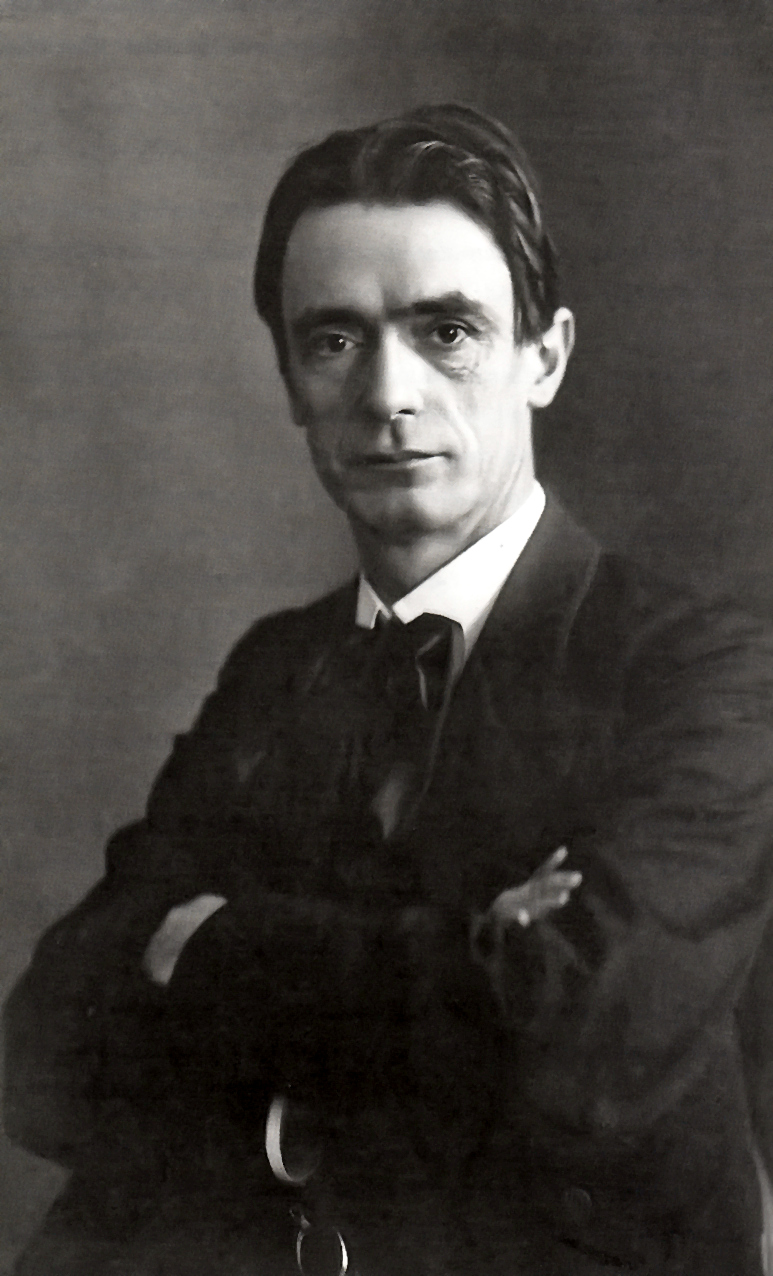
[Editor’s note:  The following article is an exposition of the views of Rudolf Steiner, which after a general description of his view of evil in particular, focuses on his view of economic imperialism.  The TTIP fits into Steiner’s view of economic imperialism, and the TTIP is viewed in light of being a manifestation or example of this category or phenomenon, which Steiner traces to 17th century English parliamentarianism.   This article also includes a discourse on the definition and reality of the US Empire, and explores both MacKinder and Brzezinski’s view of the US interest in Europe, as being a bridgehead aimed at containment of the Eurasian heartland. – J.V Capone]

“Europe is America’s essential geopolitical bridgehead on the Eurasian continent (p.59)…America’s central geostrategic goal in Europe …is to consolidate through a more genuine transatlantic partnership the US bridgehead on the continent so that an enlarging Europe can become a more viable springboard for projecting into Eurasia the international democratic and cooperative order.” – Zbigniew Brzezinski, Grand Chessboard

One of the most important elements of Austrian scientist and philosopher Rudolf Steiner’s legacy is the understanding of the reality of evil – of an active force of evil in the world. And since, as he stated, in the final analysis there is nothing in the world except beings in various states of consciousness, evil is ‘incorporated’ (even if there are normally no visible bodies) in real evil beings, whose purpose is to thwart genuine human evolution i.e. spiritual evolution. Traditional Christianity, and also other religious streams, was familiar with the being named Lucifer – the archetypal “fallen angel”, cast out of heaven with his Steiner_um_1905followers for their rebellion. Continue reading

The Ukrainian Failed State: Analysis of Phase 3

Small Logo By:  Joaquin Flores

The Ukrainian Failed State: Analysis of Phase 3

Part 6 in our series

Sunday’s election sees an increase in ‘anti-Russian’ representation in the Rada: US-backed Pravy Sektor and Svoboda pressure on the US-backed Kiev Junta corroborates a Phase 3 plan, as the Kiev Junta may resume major operations.  The US needs to create a failed state in Ukraine to advance its agenda, with Poroshenko getting caught in the middle.  Both sides vie for the 4GW advantage, while being careful to not lose site of reality from the expanding hyper-reality. 


A Note to Readers:  This is the 6th installment of a series of related reports on the real underlying methods and framework which characterize the Ukrainian civil war.  These are thorough in exploring and explaining, in as full a way as possible, the most relevant factors which operate upon this phenomenon.  Like our previous works on the subject, this report is approximately 50 pages at about 15,500 words.  In addition to these six reports, there are another dozen or so shorter articles on the subject to be found on our site, as well as about two dozen interviews and podcasts, which can be found either in the multimedia section or embedded in the shorter articles where indicated.  Being familiar with our past reports makes this report more flexible.  A reader is then able to read each chapter as a stand-alone article


old-english-calligraphy-alphabet-the election of Sunday, October 26th, was called by Poroshenko to ostensibly push the government into an even further anti-Russian position.  On the face of it, the election aimed to escalate what has been termed a ‘lustration’ process [1]. This fits well into the common narrative, being that Poroshenko is directly controlled by the US to push against Russia.  While this is true, there is also another more complex dynamic unfolding, which will be explored in this report. Continue reading

Theoretical Views on Ukrainian Nationalism, Socialism and Capitalism since the Dissolution of the USSR

248227777_679812a8ac_m  By: Dr. Matthew Raphael Johnson

Theoretical Views on Ukrainian Nationalism, Socialism and Capitalism since the Dissolution of the USSR


14-685x320
Ukraine protest

old-english-calligraphy-alphabet-the disturbing events in the first two months of 2014 show the severity of the Ukrainian issue and its significance for the west. To argue that the violent and unopposed protests were arranged and protected by US intelligence is to argue the obvious: no one risks their life for abstract issues such as EU membership. Continue reading

The Never-Ending End of History and the Recurrence of the Last Man

248227777_679812a8ac_m  by:  George Markoff

The Never-Ending End of History and the Recurrence of the Last Man


10584214_10152317113550079_790669187_n

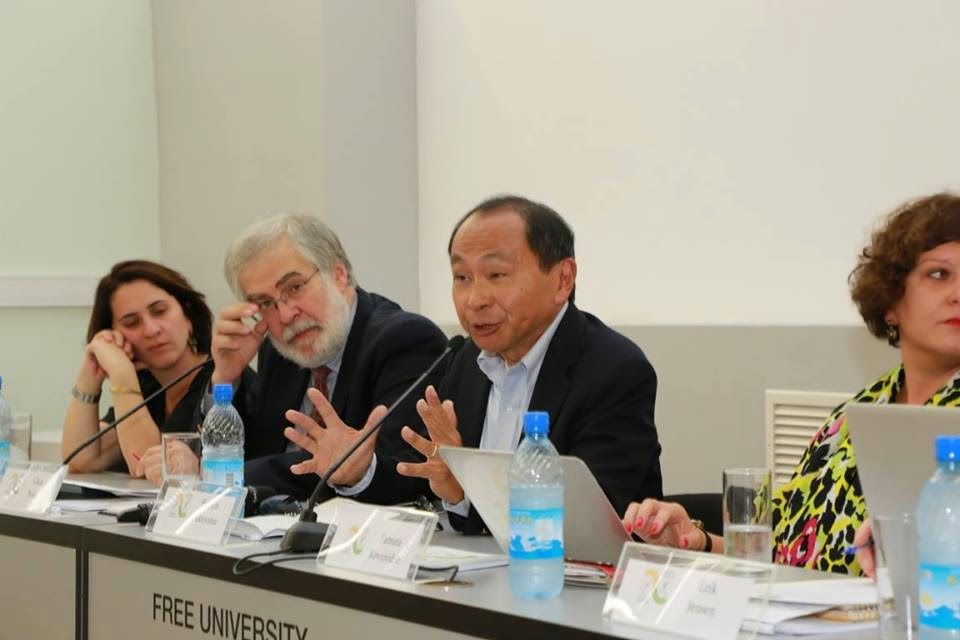
Francis Fukuyama in Tbilisi, Republic of Georgia

Recently I had a chance to attend an open lecture of the world renowned political theoretician, Francis Fukuyama, who, as a member of a delegation from Stanford University, gave a number of public lectures in Tbilisi, the capital of Georgia, on the topic of the future of democracy in the 21st century. Continue reading