
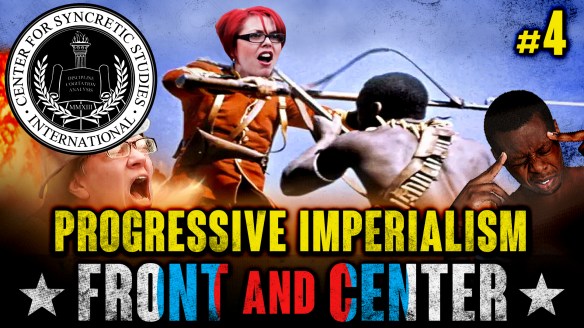
Tim Kirby, ideological director at the Center, and Joaquin Flores, director at the Center, debate what the ins and outs of ‘Progressive Imperialism’. Kirby poses the question to Flores “How are progressives being used for imperialism?”
Flores tries to deconstruct the phenomenon, beginning by talking about how the Atlantic Council has ‘deployed’ a series of progressive journalists recently to write hit pieces on the Center. Flores and Kirby move towards deconstruction the psychological, sociological, and geopolitical factors behind this phenomenon. What emerges is quite interesting: Progressive institutions which have arisen in more recent decades, have re-written history.
While ‘progressive’ reforms in the US were sometimes supported by progressives, in reality they were fought for by much more militant and grass-roots people and movements, who had broader visions and who were hardly in-league with US imperialism. Far from it, they were its most ardent opponents.
The US has successfully transformed its narrative into one which co-opts the struggle against the US ruling class itself, and weaponized into a tool – a legitimating ideology – which lures in and convinces progressives from other countries, primarily peripheral to Europe and in the post-communist world.
This is where Human Rights Imperialism recruits its most ardent foot soldiers from – those who do not really understand the America story from a really American working-class or grass-roots perspective, and are only really exposed to the narrative of its progressive institutions.


 he rise of the protest movement in Donbass (and other regions of historical Novorossiya) which resulted in the proclamation of the People’s Republics, was a reaction to the coup d’etat in Kiev and aggressive Russophobic policies. It is no accident that the first legislative step of the new Ukrainian authorities was abolishing the language law, ratified in 2003 by the Verkhovna Rada in line with the European Charter for Regional or Minority Languages, which effectively pushed the Russian language out of the educational and cultural-information space of Ukraine. However, the popular movement in Donbass at the end of winter and spring 2014 also had deeper motives. The proclamation of the people’s republics of Donbass was a logical reaction to the dismantling of Ukrainian statehood as it had been formed in the framework of the Ukrainian Soviet Socialist Republic. The new Ukrainian authorities violated the tacit social contract of loyalty to the existing state in exchange for a guaranteed minimum of cultural-linguistic rights for the regions of the “South-East” (historical Novorossiya).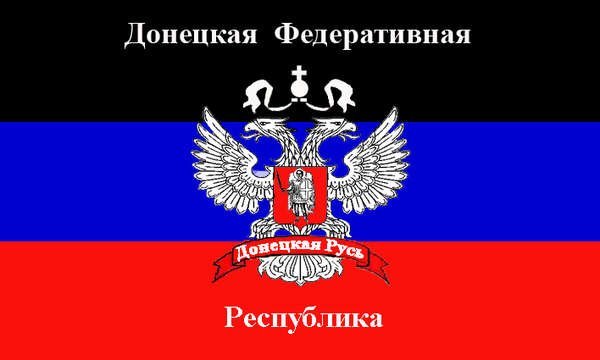


 syncreticstudies.com