
An Interview with Czech Communist Ideologist Josef Skala – Part 1
 By: Dr. Eduard Popov – translated by Jafe Arnold
Eduard Popov is a Rostov State University graduate with a PhD in history and philosophy. In 2008, he founded the Center for Ukrainian Studies at the Southern Federal University of Russia in Rostov-on-Don. From 2009-2013, he was the founding head of the Black Sea-Caspian Center of the Russian Institute for Strategic Studies, an analytical institute of the Presidential Administration of Russia. In June 2014, Popov headed the establishment of the Representative Office of the Donetsk People’s Republic in Rostov-on-Don. He has actively participated in humanitarian aid efforts in his native Donbass and is a key contributor to various Donbass media, such as the Lugansk-based Cossack Media Group.

Foreword from CSS Director Joaquin Flores:
 he Center for Syncretic Studies finds great satisfaction in providing the following eye-opening interview, conducted by our esteemed colleague, Dr. Popov of the Russian Federation, who asked a number of pertinent questions to Dr. Josef Skala, a prominent communist leader in the Czech Republic. What the CSS has noted in a number of articles on related subjects is that there has been a steady return to the fundamental principles of worker socialism, while at the same time developing a syncretism with other socio-political phenomenon which previous generations would have, perhaps then correctly, identified as alien-class forces. Nevertheless, the further development of capitalism in the late 20th century and early 21st century has increasingly proletarianized social strata that previously were excluded from the valorization process. But today, these social strata are proletarianized, a process that has advanced in direct proportion to the total subsumption of other facets of society by capital, which may also be described as the commodification of all spheres of life.
 By: Jacek C. Kaminski – translated by Jafe Arnold

 By: Jafe Arnold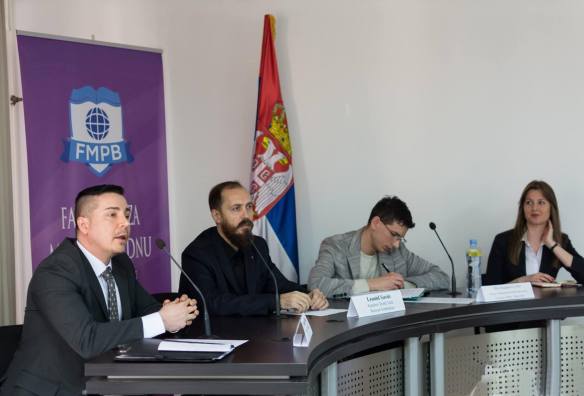
 n Wednesday morning, March 24th in Belgrade, Serbia, several dozen students, scholars, analysts, and distinguished guests including diplomatic representatives from Tunisia, Libya, Iran, Syria, Iraq, and Republika Srpska gathered at the University of Belgrade’s Faculty of International Politics and Security for the conference “The Balkans and the Middle East: Interconnections and Intersections.” Organized by the faculty in cooperation with
  By: Gustavo Aguiar – t
 n the 1960’s, at the height of the hippie movement and amidst protests against the Vietnam War, a new type of man emerged: the pacifist man whose anti-militant, progressive and social democratic spirit (with crisp Trotskyist tears) served as the cement for consolidating a redefinition of the revolutionary status established by the old proletarian left of the 19th century. Far from intending to justify the war crimes perpetrated by Yankee detachments in North Vietnamese villages and towns, or the negligible goals that led Lyndon Johnson and Richard Nixon to deploy tanks and helicopters on the plains of Indo-China, this paper aims to show the way in which the mentality of the New Left eventually engenders thought that is diametrically opposite to the slogans that adorn the signs in the subversive scenario of protests. Today, the same slogans are used as instruments of destabilization around the globe in service of the neocolonialist hyper-powers.
 n the
n the  syncreticstudies.com