
 By: Ronald Thomas West
The Decline of the West & its Shaping by Long-Standing European Misconceptions on the Essence of Society and Being

 t should be said first that the following observations offer a view that does not originate with Western thought, and therefore in the Western academic sense may be deemed insufficient.
This is for two reasons, primarily; 1) the thought that all analysis must be subject to exam for the fact of necessary cultural bias, when bias must be synonymous to belief, and; 2) this essay does not delve deeply into the subject academically but necessarily notes certain phenomena in a context of inter-cultural observation, exogenous to what is known as the ‘Institution’. This is necessitated by the observation that Western academia can be (more often than not often is as a matter of rule) a feedback loop where mistaken ideas are perpetrated by a process of ‘peer review’, or subjected to strict framing by ‘empiricism’ (3rd party interpretation) with a vested interest in protecting a status quo.
The method used here is not Western but derives from an oral history form exogenous to European culture. This method proposes a story constructed from metadata and is a hybrid in that philosophical elements of non-Western oral history and related to underlying principles of thought and a format is applied to (or superimposed upon) Western metadata.

 s enumerated in our mission statement and “Our Goals” section, the Center for Syncretic Studies is committed to shaping intellectual and political discourse in an interdisciplinary, and ultimately syncretic manner through a diverse range of media. In this spirit, many of our research fellows and associates’ contributions to such fields as political science, international relations, geopolitics, and religious and esoteric studies can be found across a plethora of different journals, sites, and media interfaces independent of the Center’s own direct projects of
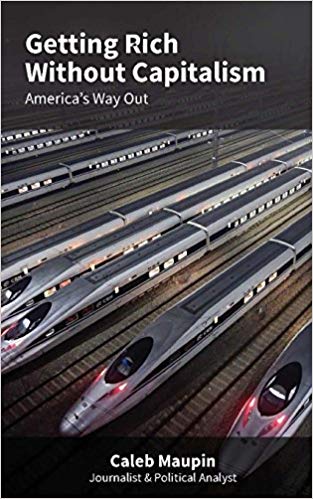

 By: Padraig McGrath
 n his 1960 magnum opus “Truth and Method” (“Wahrheit und Methode”), Hans-Georg Gadamer attempts to develop a theory of how we might be able to rescue overarching norms from the flux of history. To this end, Gadamer employs his famous “horizon”-metaphor. Gadamer’s idea is that one starts from a certain time and place inside history, and that as one learns and experiences more and more, the individual continuously approaches the horizon (the borders of ones worldview, the delimitations of ones culturally set-up version of reality, etc).
 By: Andrew Korybko
 he Center for Syncretic Studies is pleased to present another original academic piece, in full, from our Russian collaborator, Mr. Andrew Korybko. This analytic monograph was a previously in-house submission to the Moscow State Institute of International Relations.
 syncreticstudies.com